day10 / our work.

uCTRL — an AI-Native Health Intelligence App

Mobile

Healthtech

uCTRL an AI-Native Health Intelligence App

uCTRL an AI-Native Health Intelligence App

uCTRL an AI-Native Health Intelligence App

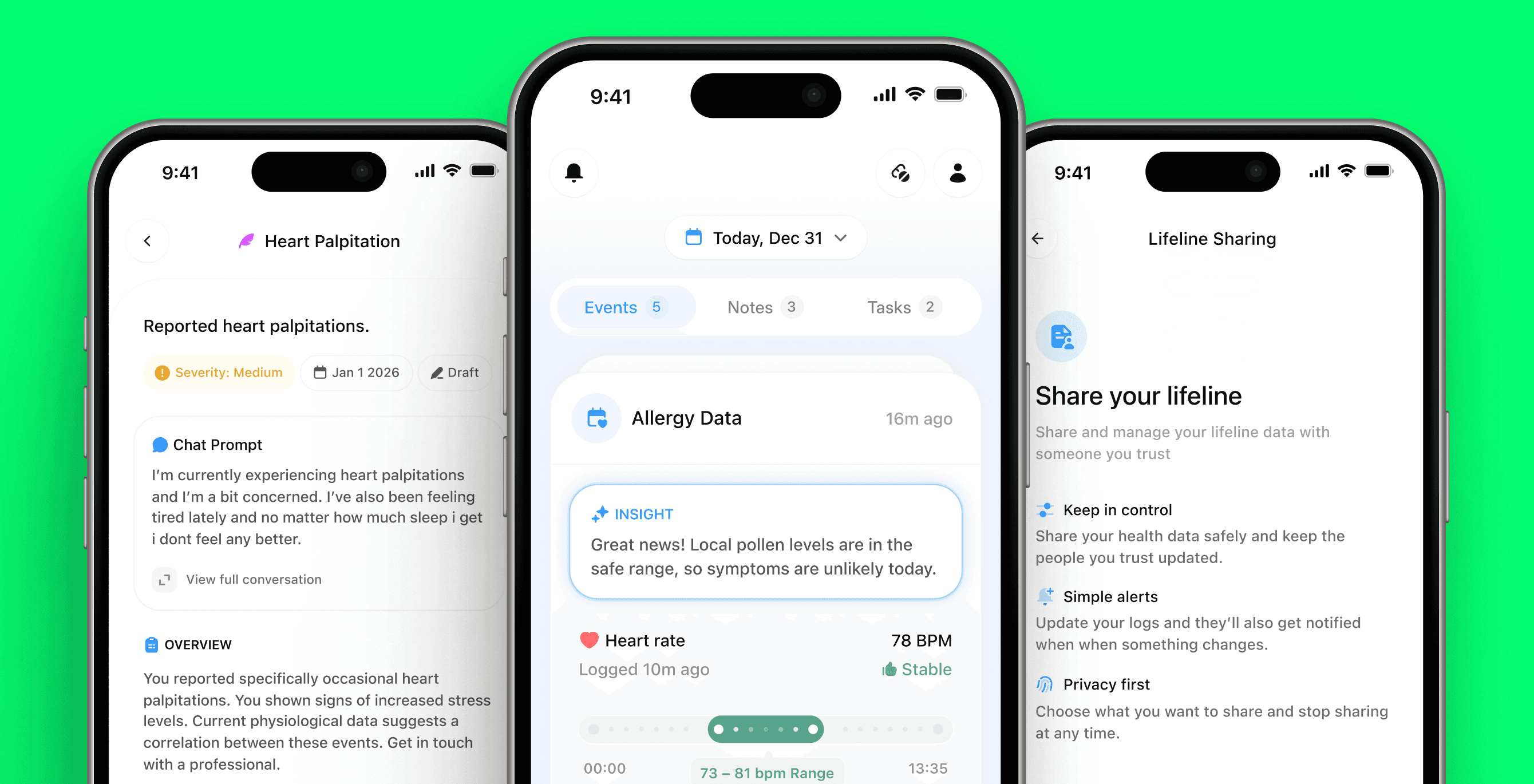
AI gives every user the same health answers. It does not give them an aha moment.
/01

Client

uCTRL is a health-tech startup built around a single thesis: your health data is yours, and you should be able to own, understand, and act on it. The product is currently in MVP, with university students as the launch audience and a broader roadmap extending to chronic-condition patients and health-conscious adults.

The team is built by veterans of the AI space, including founders who previously built Siri (before the Apple acquisition), alongside practicing physicians from top clinical institutions. For an early-stage health app, that's a rare combination. Every product decision sits at the intersection of consumer UX and HIPAA compliance.

As both a consumer-facing app and a regulated health platform, uCTRL’s advantage depends on how well the product turns scattered health signals into intelligence the user can actually feel — while keeping that data in the user’s hands.

As both a consumer-facing app and a regulated health platform, uCTRL’s advantage depends on how well the product turns scattered health signals into intelligence the user can actually feel — while keeping that data in the user’s hands.

/02

Challenge

01

Health apps don’t lack AI — they lack AI that knows you.

Wearables, EHR portals, pharmacy apps, clinic notes: the data exists, but it lives in fragments, behind separate logins, in formats that resist combination.

02

Existing solutions are vertical and walled — each one stores something, none of them reason across the others.

The result is insight as a feature buried in a tab: something the user has to go looking for, rather than something that meets them.

What uCTRL needed wasn’t another step tracker, sleep score, or AI tab grafted onto a health dashboard. The opportunity wasn’t to build another health app with an AI feature. It was to build an AI-native health intelligence app — and the mobile experience that makes that intelligence feel like it belongs.

What uCTRL needed wasn’t another step tracker, sleep score, or AI tab grafted onto a health dashboard. The opportunity wasn’t to build another health app with an AI feature. It was to build an AI-native health intelligence app — and the mobile experience that makes that intelligence feel like it belongs.

/03

Solution

Day10 owns the iOS app — the surface where uCTRL’s AI layer reaches the user. The primary interface isn’t a settings tree or a grid of metric tiles. It’s an insights surface.

Day10 owns the iOS app — the surface where uCTRL’s AI layer reaches the user. The primary interface isn’t a settings tree or a grid of metric tiles. It’s an insights surface.

Every day, the app surfaces AI-generated insights that connect events across the user’s data: sleep patterns, medication timing, activity trends — signals that would be invisible if you were looking at each source separately.

The team calls the first one the “aha moment”: the instant a user sees the app reason across their own life and surface something they couldn’t have found themselves. Not a feature. A revelation. That’s what the product is built around.
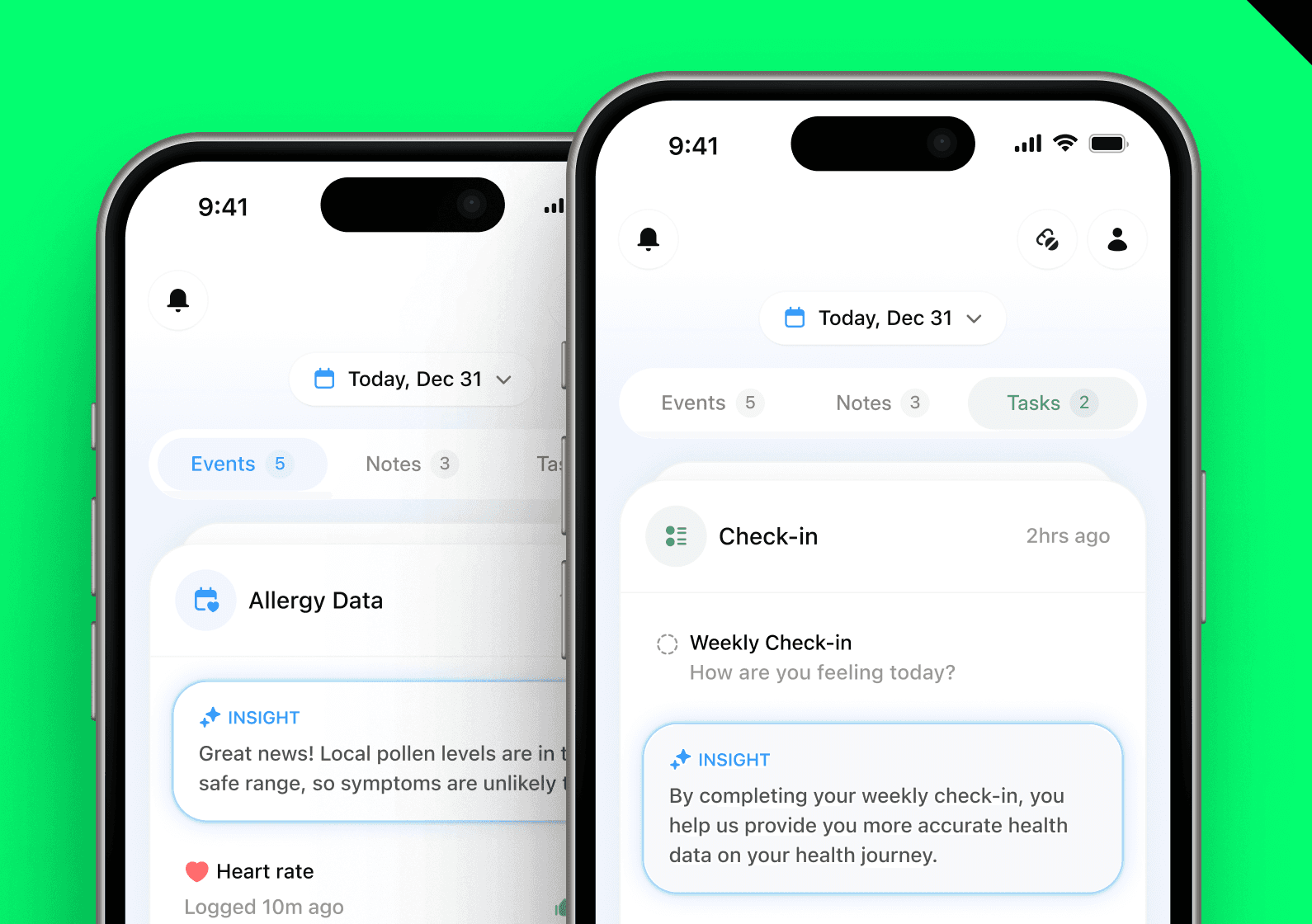
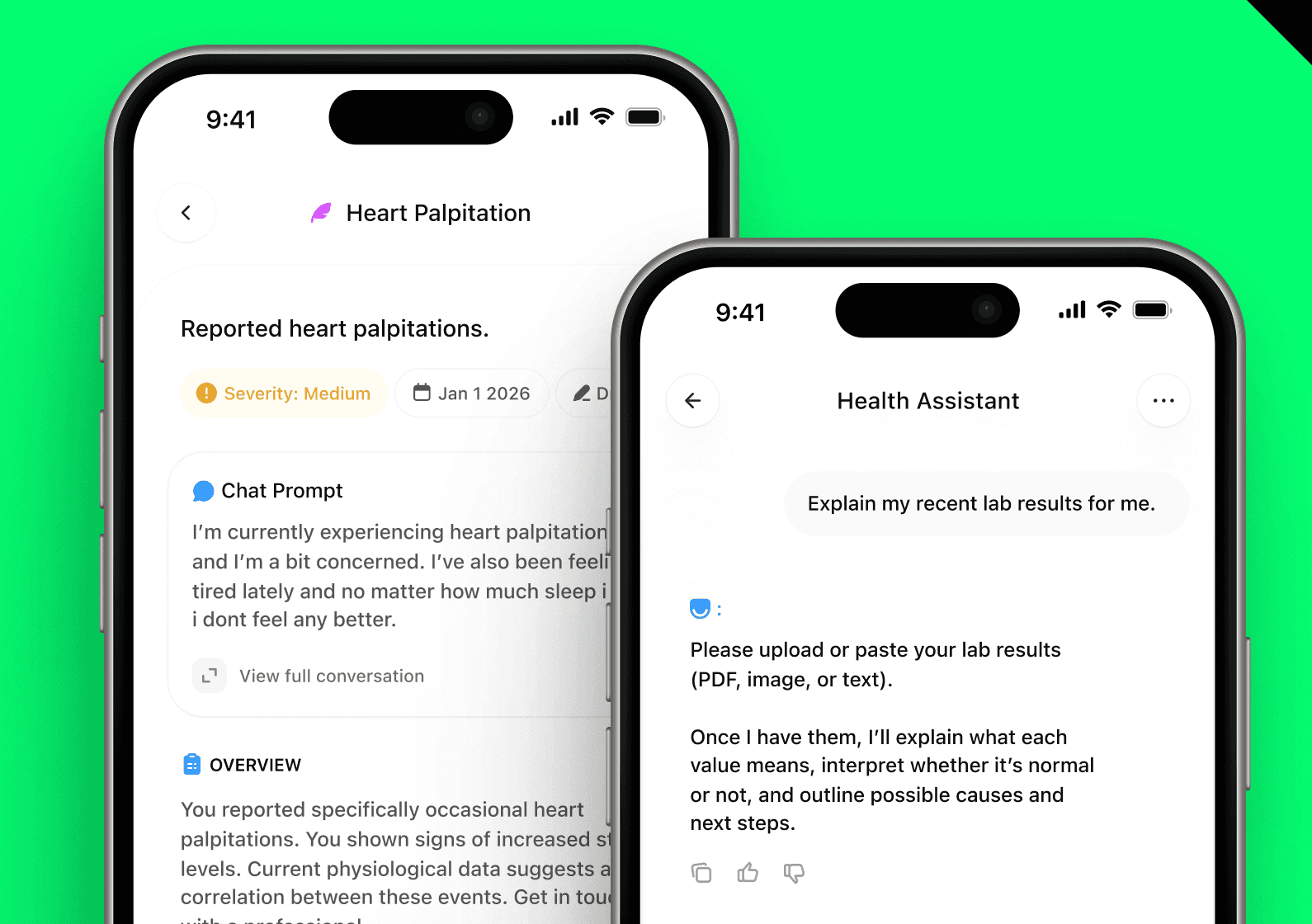
From any insight, users can ask follow-up questions in natural language (“what’s my resting heart rate doing this month?”), log symptoms or medications by voice, and share a filtered, time-bounded view of their record with a doctor or family member.

From any insight, users can ask follow-up questions in natural language (“what’s my resting heart rate doing this month?”), log symptoms or medications by voice, and share a filtered, time-bounded view of their record with a doctor or family member.

In clinical settings: scan a QR code, and the doctor has the full health record before the clipboard comes out. No forms. No memory required.
But the bigger architectural decision was where structure lives.

But the bigger architectural decision was where structure lives.

Traditional health apps assume the user fills in fields and the app stores them. uCTRL works the other way: AI generates structure. The client’s backend — a four-service Python stack on AWS, with a stateless Claude model on Bedrock and a dedicated insights service — produces reasoning, summaries, and connections on top of the user’s encrypted records.

Our job was to make that reasoning land natively: to turn an AI response into a card the user can act on, a setting the user can flip, a destination the user can navigate into. AI as a feature of the app, not a tab attached to it.
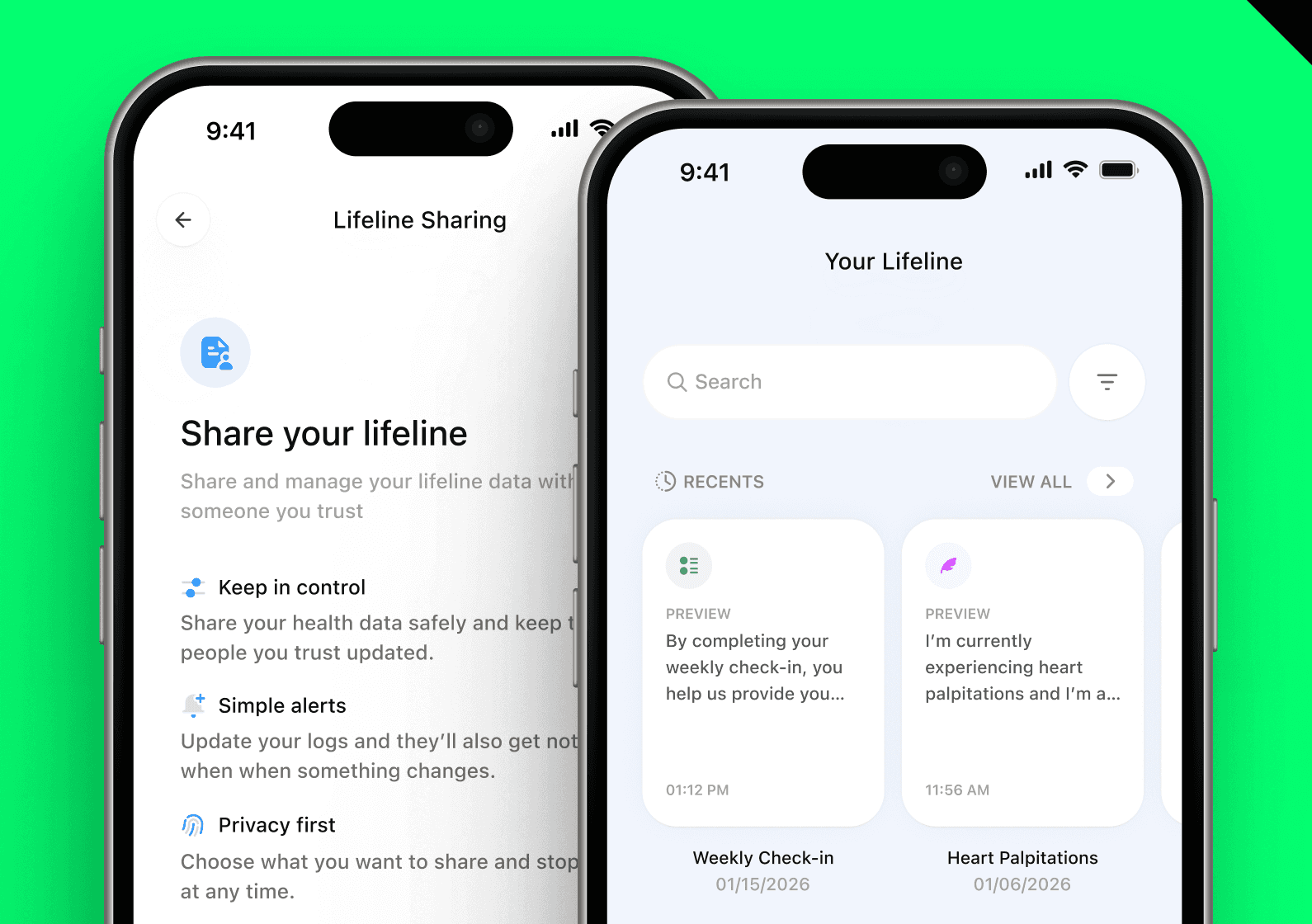
The result is an AI layer that feels embedded, not stapled.

The result is an AI layer that feels embedded, not stapled.

Past events inform current insights. And the data stays in the user’s control — encrypted, HIPAA-aligned, and built so it cannot leak across accounts even at the storage layer.

How we shipped

/01

The mobile build moves at a pace a traditional setup would not have allowed

The mobile build moves at a pace a traditional setup would not have allowed

Across a surface that made that pace meaningful: HealthKit integration, real-time voice, encrypted health records, AI insights surfaced as native UX. Each piece non-trivial. Together, more than a standard mobile build. Here’s how:

/02

Linear-first execution.

Linear-first execution.

Every piece of work, technical or not, lives as a Linear ticket; every team member always has one in-progress. The discipline keeps scope, owner, and definition of done explicit, and removes the back-and-forth of “what are you working on?” from the day-to-day.

/03

Claude Code as the engineering pair.

Claude Code as the engineering pair.

The iOS app is built with Claude Code as the only AI tool in the loop — codebase exploration, refactors, type-narrowing, ticket-by-ticket implementation, all paired with the model. The full surface area of the app — AI insights integration, lifeline timeline, sharing flows, medication tracker, voice infrastructure, onboarding — is shipped by a single embedded engineer at a velocity that would normally require a team.

/04

Replit for UX validation.

Replit for UX validation.

New UI concepts are prototyped in Replit and pressure-tested with real users before they reach the iOS codebase — so UX choices get confirmed at lower cost than a traditional design-to-engineering handoff, and engineering effort goes only toward what’s already validated.

/04

Impact

We built the iOS surface that turns uCTRL’s AI layer from infrastructure into product — the thing users actually open the app for. Daily insights that connect what no single data source could, a conversational assistant grounded in the user’s own record, granular sharing, medication tracking, and a lifeline timeline that makes ownership feel real. Less time translating AI output into UX. More time shipping features users actually see.

01

Before

After

01

AI bolted onto a health dashboard as a tab or chat feature

AI bolted onto a health dashboard as a tab or chat feature

AI insights embedded as the home surface the user lands on

AI insights embedded as the home surface the user lands on

02

Health data scattered across HealthKit, EHR portals, and clinic notes

Health data scattered across HealthKit, EHR portals, and clinic notes

Unified lifeline — owned and controlled by the user

Unified lifeline — owned and controlled by the user

03

Generic AI answers, ungrounded in the user’s own records

Generic AI answers, ungrounded in the user’s own records

Reasoning grounded in the user’s own encrypted data

Reasoning grounded in the user’s own encrypted data

04

Insight as a screen the user has to seek out

Insight as a screen the user has to seek out

Insight as the first thing the user sees — the aha moment

Insight as the first thing the user sees — the aha moment

05

Doctor visits require filling out clipboards from memory

Doctor visits require filling out clipboards from memory

QR scan surfaces the full record — ready for the doctor

QR scan surfaces the full record — ready for the doctor

06

Mobile delivery as the bottleneck on a complex, multidisciplinary build

Mobile delivery as the bottleneck on a complex, multidisciplinary build

Mobile delivery as a single-engineer, AI-assisted track

Mobile delivery as a single-engineer, AI-assisted track

/05

Team snapshot

AI-Augmented Senior Pod

1 FTE

+

Senior AI Engineer

Senior AI Engineer

1 FTE

1 FTE

Traditional build would require

3-4 FTE

We help teams build AI-first companies from day one and re-architect existing businesses to operate at AI speed.

131 Spring Street

New York, NY 10012

2026 All rights reserved.

We help teams build AI-first companies from day one and re-architect existing businesses to operate at AI speed.

131 Spring Street

New York, NY 10012

2026 All rights reserved.

We help teams build AI-first companies from day one and re-architect existing businesses to operate at AI speed.

131 Spring Street

New York, NY 10012

2026 All rights reserved.