day10 / our work.

Healthcare MSOs

Healthcare MSOs

Healthcare MSOs

Healthcare MSOs

Healthcare administrative operations werent designed as a complete unified system. They evolved as a patchwork of legacy portals and manual handoffs with no single source of truth.
Healthcare

/01

Client

Our client's mission is to empower clinician entrepreneurs and small healthcare practices to build, launch, and grow without drowning in administrative complexity.

The stack was solid: modern EHR, RCM, clearinghouse, eligibility, credentialing, scheduling, intake. The components were all in place - but each tool operated in isolation.

For a small clinician running their own practice, there was no single place to answer the most basic question: where does the money stand today?

For a small clinician running their own practice, there was no single place to answer the most basic question: where does the money stand today?

/02

Challenge

The core problem wasn’t missing software. It was the absence of orchestration.

The core problem wasn’t missing software. It was the absence of orchestration.

01

Revenue workflows spanned multiple vendors, each with its own interface, logic, and timing

Answering basic questions — why a claim was denied, where cash was stuck, which providers were billable, what required action today — meant navigating systems that didn’t share a unified operational model.

02

The business was run by a lean team covering clinical, financial, and operational roles.

It depended on converting visits into reimbursed claims — consistently and without leakage.

/03

Solution

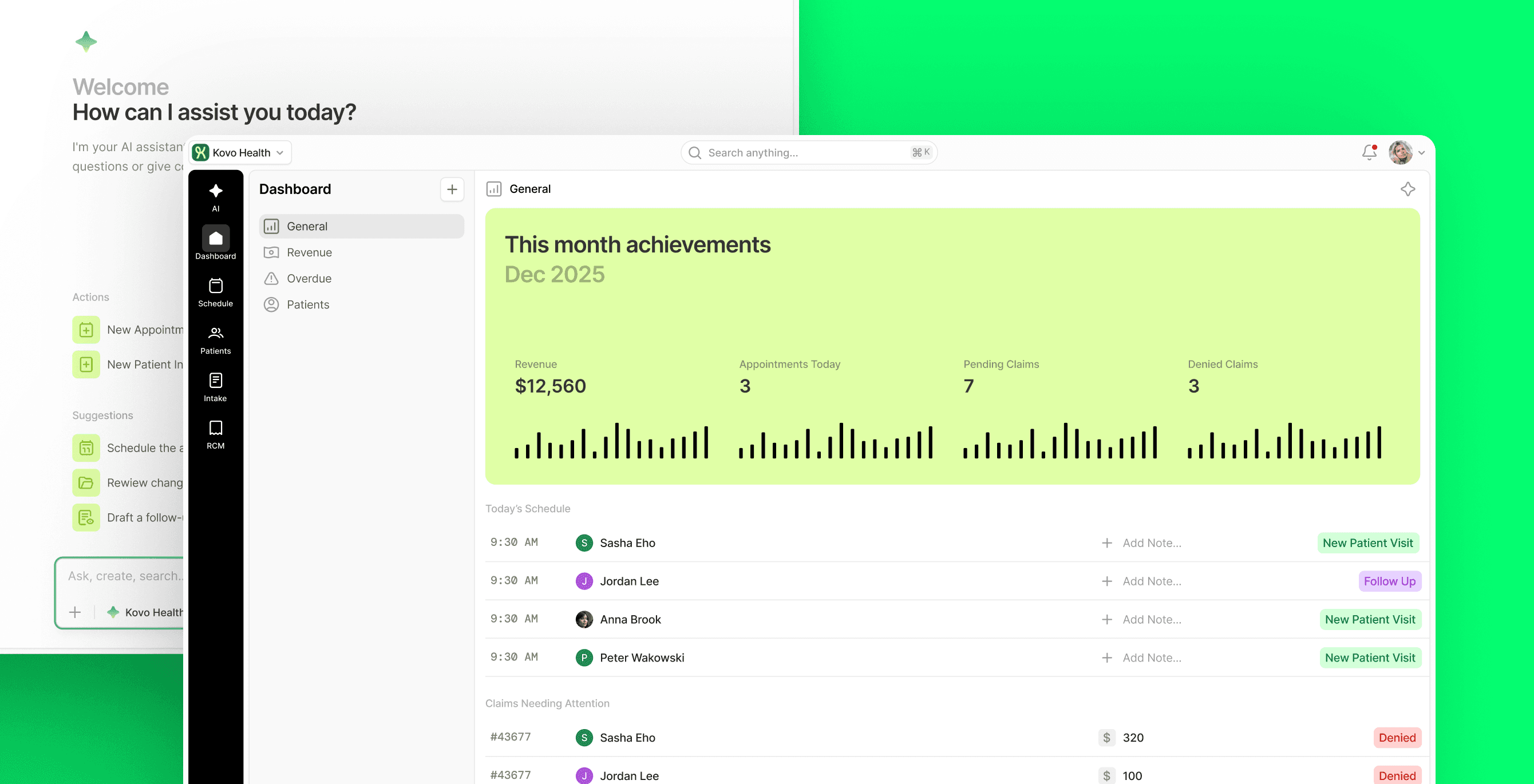
Instead of replacing existing EHR and RCM systems, we built a thin AI-native operational layer above them. An Ops Brain.

Instead of replacing existing EHR and RCM systems, we built a thin AI-native operational layer above them. An Ops Brain.

It ingests structured data across the stack, normalizes claims, denials, eligibility, and provider status, translates payer logic and denial codes into plain language, and prioritizes work by financial impact. Not another dashboard. An intelligence layer.
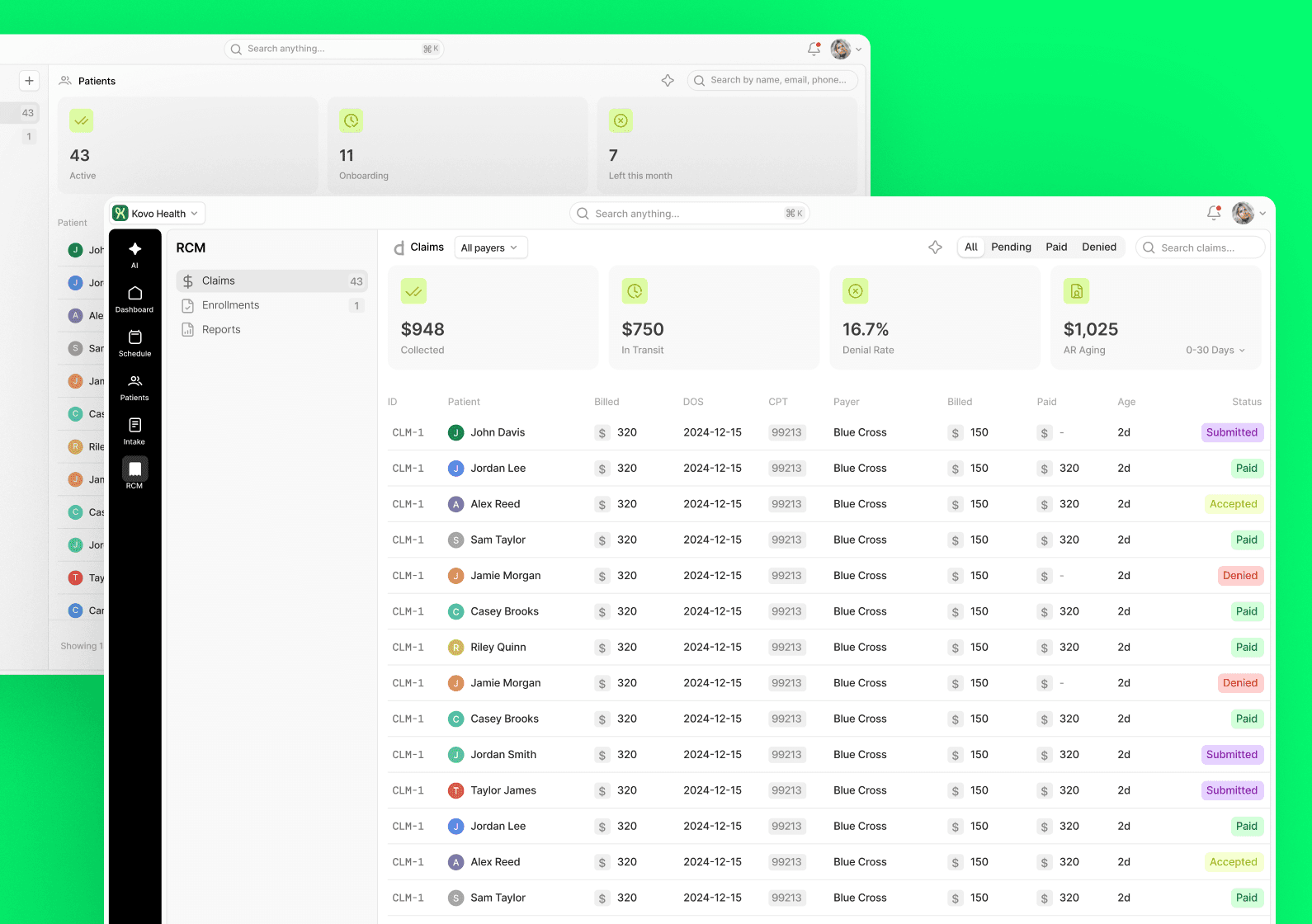
The interface was designed around how operators actually think, not how legacy healthcare software was built.

The interface was designed around how operators actually think, not how legacy healthcare software was built.

Claim-level timelines, plain-English denial explanations, recoverability estimates, and suggested next steps. A founder can understand any claim in under 30 seconds.
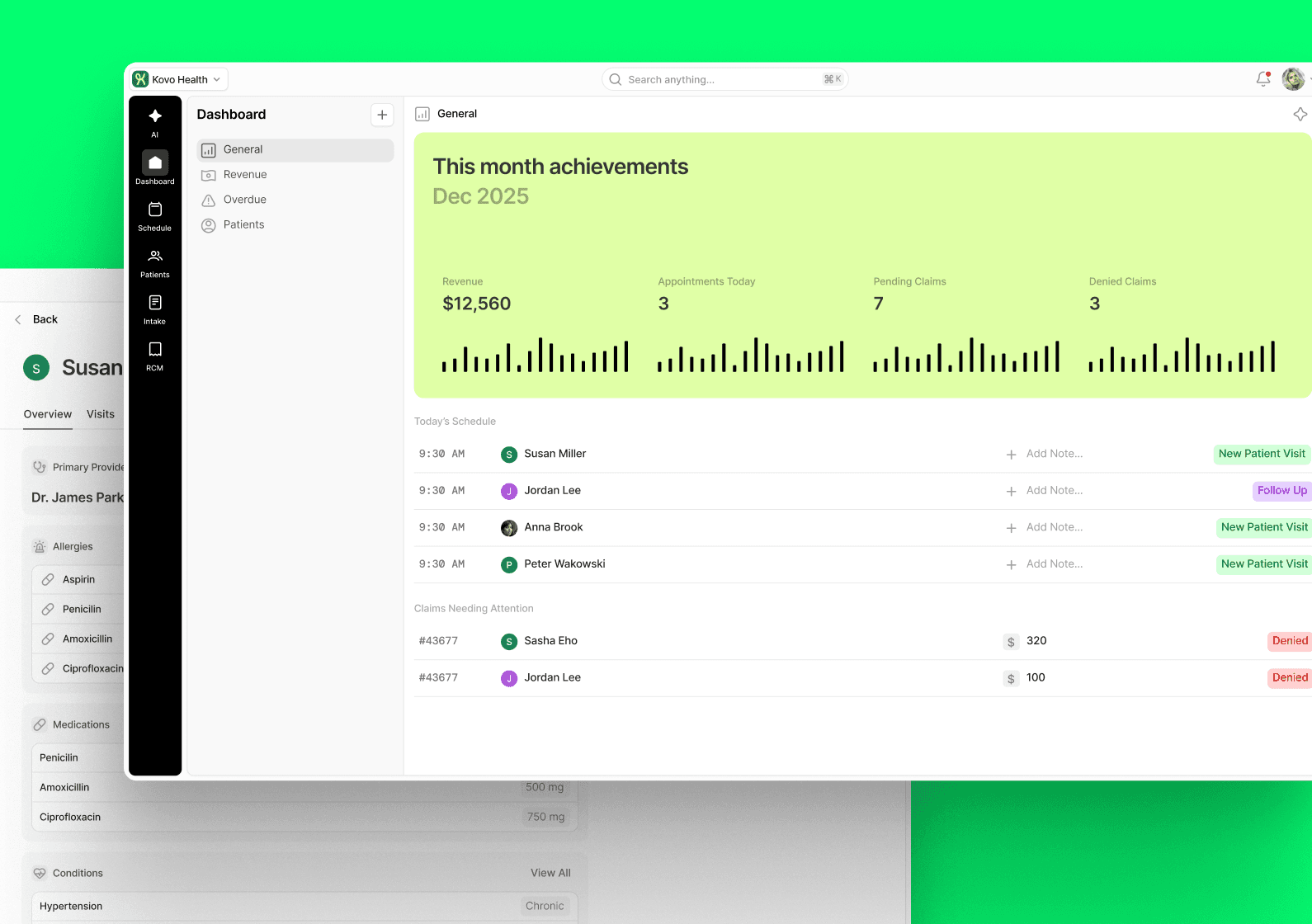
Not a chatbot. A structured operator interface.

Not a chatbot. A structured operator interface.

On top of that, we built AI-generated worklists that rank claims by dollar impact and SLA risk, shifting billing from reactive cleanup to proactive prioritization

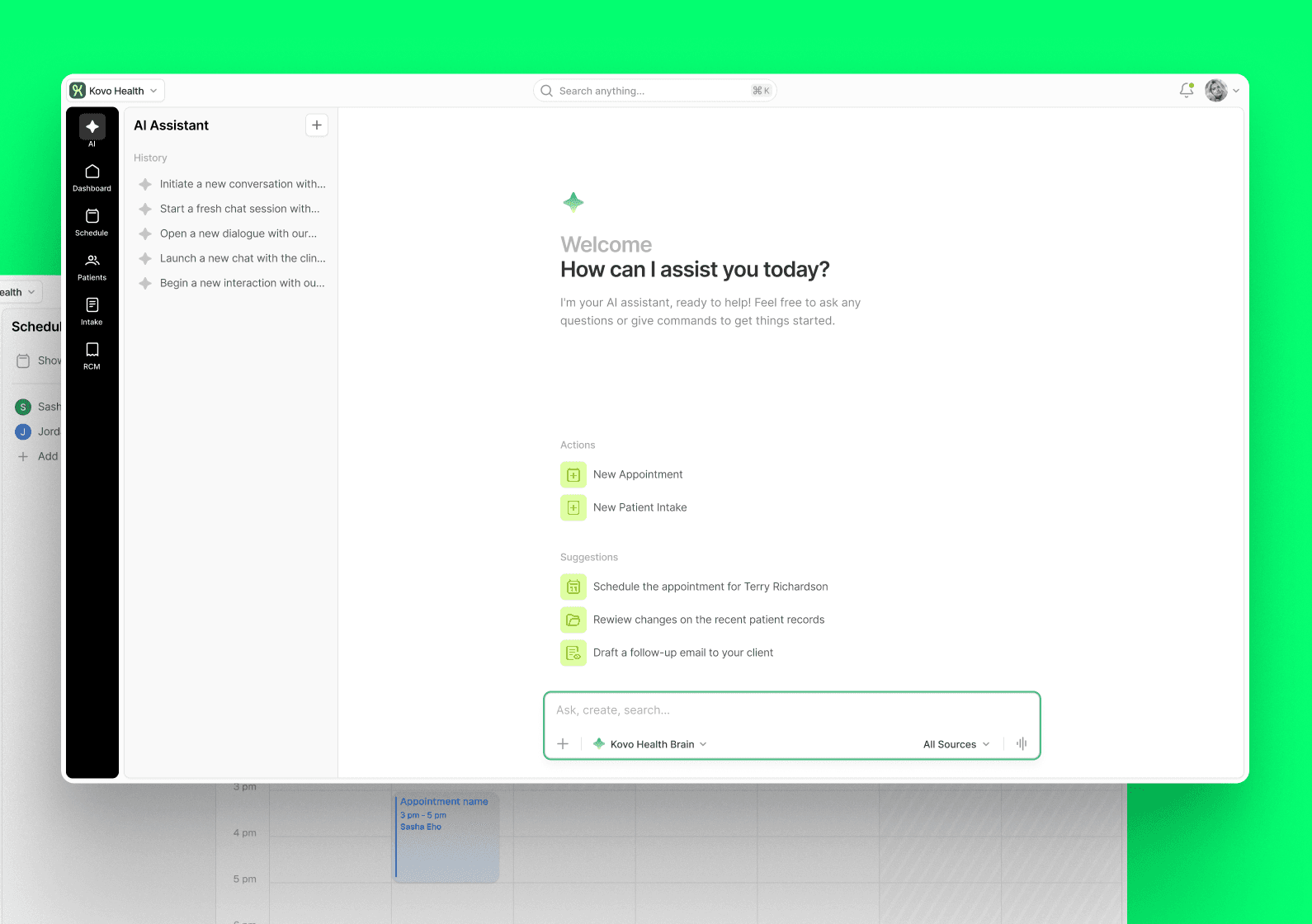
And an embedded AI assistant that surfaces revenue risk, drafts follow-ups, and schedules actions directly inside the workflow.
/04

Impact

We built an AI-first operational layer that turned fragmented revenue ops into a single intelligence layer. For a lean team running $1M+ in annual claims, that's not a productivity win. It's a survival advantage.

01

Before

After

01

15–20% denial rates

15–20% denial rates

Clean claim rates up 15pp

Clean claim rates up 15pp

02

Fragmented dashboards

Fragmented dashboards

Single revenue intelligence layer

Single revenue intelligence layer

03

Opaque AR

Opaque AR

Real-time time-to-cash visibility, denial recovery 40% → 60%

Real-time time-to-cash visibility, denial recovery 40% → 60%

04

Manual triage across systems

Manual triage across systems

AI-generated worklists ranked by dollar impact, revenue uplift up to 6%

AI-generated worklists ranked by dollar impact, revenue uplift up to 6%

05

Founder guessing what to fix first

Founder guessing what to fix first

Clear daily revenue priorities

Clear daily revenue priorities

/05

Team snapshot

AI-Augmented Senior Pod

2 FTE

+

Principal Product Architect

Principal Product Architect

0.5 FTE

0.5 FTE

Product Designer

Product Designer

0.5 FTE

0.5 FTE

AI Architect

AI Architect

1 FTE

1 FTE

Traditional build would require

7-8 FTE

We help teams build AI-first companies from day one and re-architect existing businesses to operate at AI speed.

131 Spring Street

New York, NY 10012

2026 All rights reserved.

We help teams build AI-first companies from day one and re-architect existing businesses to operate at AI speed.

131 Spring Street

New York, NY 10012

2026 All rights reserved.

We help teams build AI-first companies from day one and re-architect existing businesses to operate at AI speed.

131 Spring Street

New York, NY 10012

2026 All rights reserved.